
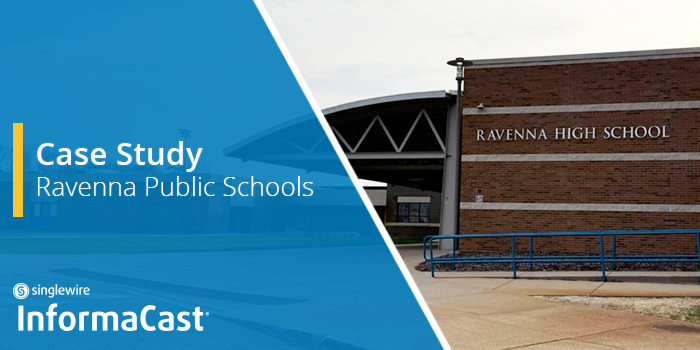
Ravenna Public Schools is located in western Michigan and serves approximately 1,000 students and 200 staff across three buildings.
The Challenge:
Ravenna Public Schools in western Michigan struggled with a fragmented, aging communication infrastructure that relied on manual adjustments and lacked automated protocols. The district needed a way to unify its disparate analog and IP systems to ensure reliable, district-wide alerts and synchronized daily operations.
The Solution:
The district implemented InformaCast from Singlewire Software to serve as a major component of its safety and communication strategy and allowing for a phased transition to IP endpoints while maintaining legacy equipment. This move automated critical safety procedures, including one-touch lockdowns and synchronized bell schedules, significantly reducing response times and operational burdens.
Moving from Legacy Systems to a Modern Solution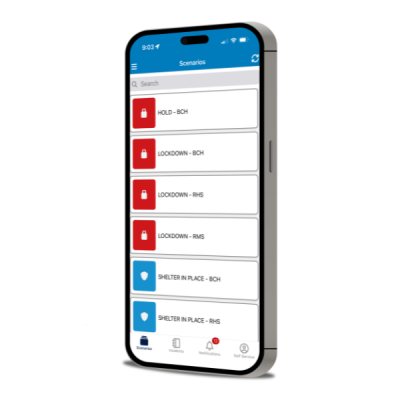
Ravenna Public Schools is a rural district located in Muskegon County, Michigan. It serves approximately 1,000 students and 200 staff members across three main campus buildings: an elementary school, a middle school, and a high school. As the district grew and safety requirements evolved, Technology Director Ryun Landheer recognized that their existing communication tools were failing to keep pace with the needs of a modern educational environment.
“Our analog paging system was probably 20 or 30 years old,” Landheer recalls. “It was very limited. There were no bells and whistles—it was just a simple, old-school paging system that didn’t meet our growing needs.”
The paging system was one of multiple pieces of infrastructure that was a “cobbled-together” mix of legacy technology. It offered no way to adjust volume at an individual speaker level or target specific rooms. The bell system was an operational burden that required daily maintenance. If the district wanted to change a bell schedule, it required staff to physically manipulate switches on hardware units mounted to the walls. The district’s clocks were also chronically out of sync, forcing the IT team to manually override time zones twice a year.
The most significant deficiency, however, was in emergency preparedness. Without automated notification tools, there was no way to trigger a building-wide lockdown without someone remaining on a physical phone line to manually announce a threat. When reviewing the district’s Emergency Operation Plan, district leaders found they had to mark many technology-based safety sections as “not applicable” because the existing system simply could not support them.
A Unified, Flexible Transition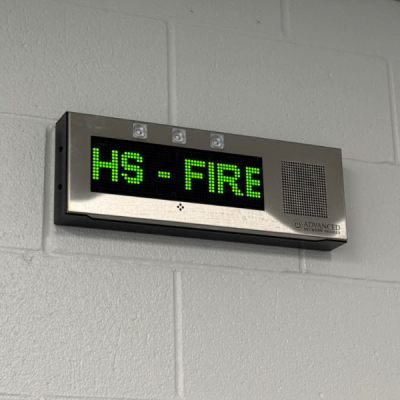
Driven by the need to resolve these safety gaps and operational “headaches,” Ravenna utilized funding from a Michigan State Police safety grant to begin implementing InformaCast. Landheer spearheaded the transition, having used InformaCast in a prior school district, he chose the software for its ability to serve as a “central brain” for both daily and emergency needs.
One of the most critical aspects of the implementation was the software’s flexibility regarding hardware. Ravenna did not have the budget for a total replacement of all existing equipment. InformaCast allowed the district to integrate new IP-based endpoints while still utilizing their legacy analog paging speakers. This phased approach meant the district could prioritize high-traffic areas first, eventually covering 93 individual spaces across the campus.
“The ability to utilize our existing speakers while adding new IP clocks and speakers was a huge advantage,” says Landheer. “It allowed us to be strategic with our budget and ensure we had coverage where we needed it without having to replace everything.”
Implementing Rapid Lockdown and Response
The most transformative change for Ravenna has been the automation of emergency protocols. The district installed physical panic buttons under office desks and throughout buildings, all tied directly to InformaCast.
“The laundry list of things I had to do manually before would take me 30 to 40 seconds to do,” Landheer explains. “Now, they hit the button under their desk, and they can instantly run to safety. That could be the difference literally between life and death.”
When a button is pressed, the software triggers multiple simultaneous actions—broadcasting siren tones, sending text and email alerts to administrators, and integrating with the access control system to automatically lock all exterior doors. Before this automation, these tasks had to be performed manually while under the extreme stress of an active threat.
Unified Response Through the Standard Response Protocol
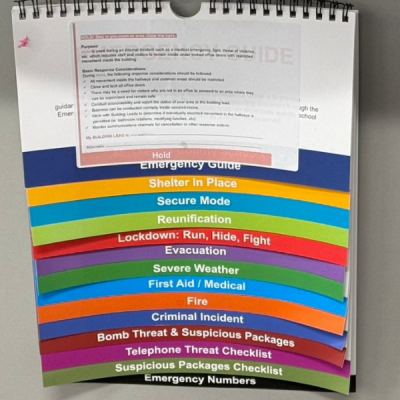 To maximize the effectiveness of these automated alerts, the district moved away from confusing color-coded systems in favor of a “common language” approach based on the Standard Response Protocol (SRP) from The “I Love U Guys” Foundation. This helps ensure that everyone—from students and staff to first responders— understands exactly what’s happening and what they should do during a crisis.
To support this transition, the district placed emergency flip charts in every classroom. By integrating the terminology directly into InformaCast, the Ravenna created a powerful reinforcement loop: staff hear an alert over the speakers, see it scrolling on IP clock displays, and can immediately reference the corresponding tab on their flip chart for detailed sub-steps.
“By using InformaCast to broadcast the same language found in our flip charts, we ensure there is zero ambiguity,” Landheer explains. “The software reinforces the training, so even in a moment of panic, everyone knows exactly what action to take. That consistency saves time, and in our world, time is everything.”
The Power of Personalization and Consistency
The district discovered that adding a “human element” to their notifications significantly impacted the effectiveness of their drills and emergency response. Rather than using a generic text-to-speech voice, the district recorded emergency messages using their principals’ voices.
“We recorded the voices of our principals because it provides a level of comfort and authority that a computerized voice can’t match,” says Landheer. “It also adds a layer of security; staff know that if they don’t hear their principal’s voice, the ‘all-clear’ isn’t official.”
This approach has been particularly beneficial for elementary students and those with high anxiety. Hearing a familiar, respected authority figure provides reassurance during the jarring tones of a drill or a true crisis.
Enhanced Operational Efficiency
Beyond emergency response, InformaCast solved the district’s chronic struggle with timekeeping and scheduling. The inability to sync the same time across district devices led to disruptions in when classes were being dismissed, and during Daylight Saving Time, clocks often had to be reset manually. By setting the time in InformaCast, all of the district’s devices, including IP endpoints, digital signage, and Chromebooks, are synced down to the second.
This precision has streamlined daily management for the IT and maintenance departments. Landheer can adjust individual speaker volume, creating custom levels for different areas of a school when bells ring, and can even create temporary paging zones without affecting neighboring rooms. This has been invaluable during mandated state testing, allowing the district to maintain silence in specific wings while the rest of the school continues its normal routine.
“Before, if a teacher asked for a schedule change, we often had to say no because it was such a difficult process,” Landheer admits. “Now, I can create a new schedule, apply it to a building, and it’s done in seconds. It has turned a major headache into a non-issue.”
The Road Ahead
Looking forward, Ravenna plans to expand its usage of InformaCast to address after-school athletic events and outdoor safety. The district is exploring ways to implement automated athletic-specific lockdowns and further integrations with interactive flat panels in classrooms to serve as visual endpoints for those with hearing impairments.
“The software is rock solid,” Landheer said. “I’ve never had an issue, because it works every time. If we think of a need, we find a way to make it happen. When I need it to work, I know it will work.”
To learn more about how schools and districts are leveraging InformaCast to enhance safety and communication, visit www.singlewire.com/informacast-k12-education.